Monday, January 24, 2022

How Often Should Your Dog Have an Exam?


The most important thing you can do for your four-legged best friend is make sure that they live a healthy and happy life. In addition to ensuring they have plenty of exercise, are eating a healthy diet, and have lots of affection, you’ll also want to keep them on a regular schedule with their veterinarian. While many people just rely on their vet to give them an update of when and why to bring their pup in for their next visit, very few understand the reasoning behind the frequency. 

What the AVMA recommends


According to the AMVA canine preventative healthcare guidelines, all dogs should have a veterinary examination at least annually. While this rule seems to be the general rule of thumb for all dogs, the AVMA goes on to say that for many dogs, more frequent visits may be appropriate, and the frequency of visits should be based on individual needs of the dog. Essentially, the recommendation is very similar to that of a grown adult, dogs should attend regular wellness exams and if you detect a problem, you should consult a veterinarian.  


Why are regular wellness checks so important?


For many, it may feel natural to judge how their dog is doing simply by their temperament and general weight and attitude. While it’s a good sign if your pup looks healthy and is generally very active and playful, it’s important to consult the experts who are trained to check and make sure that your pup has a clean bill of health. If you bring your dog to regular wellness exams, the chances of detecting any potential problem in its early stages are much higher and therefore the treatment will likely be less expensive and less difficult. 


What happens during wellness exams?


Wellness exams are great times for veterinarians to assess the health of your pup by evaluating different aspects including their weight, teeth, stool, temperament, and body type. These appointments often also include preventative care like vaccinations, heartworm prevention, and routine deworming which can help prevent diseases that are not only life-threatening but can be very expensive to treat.


Your veterinarian can also help by recommending a wellness program based on your specific dog. They will consider your pups breed, age, lifestyle, and overall health when making their recommendations. This customized plan can include recommendations for medication and preventative care, therapeutic plans, and a follow-up. 


When does my dog need more than an annual visit?


While annual visits are great for dogs in the healthiest stages of their lives, those that are more vulnerable like puppies and senior dogs might need more frequent visits. As a puppy, it’s recommended for your dog to have monthly wellness exams until their 16 weeks old. It’s during this time that your pup will get their most important vaccinations for diseases like rabies, distemper, parainfluenza, and more. After this 16-week window, the next visit is most often around six months when it’s time for them to be spayed or neutered and then after a checkup to ensure the procedure went smoothly, they move into a more regular annual schedule.


For senior dogs, it is often recommended that they visit their veterinarian semi-annually (every 6 months). More frequent changes can help catch things more quickly and can give your vet more time to treat any issues they notice as they arise.


When to visit your vet quickly


In addition to maintaining a steady cadence of vet visits, it’s also important to understand when to seek out help immediately. If your dog shows any alarming signs, has been in an accident, or is clearly in discomfort, trust your instincts and get to the ER right away. The quicker you get the help of professionals who are trained in handling emergencies for animals, the better off you and your pup will be. 


Since every dog is different, it’s important for you to consult a veterinarian like those at the Bregman Veterinary Group to help you determine the best wellness plan for your pup.  To schedule an appointment, click here to get started!


Wednesday, January 5, 2022

How To “Puppy-Proof” Your Home


Winter is one of the most popular seasons to bring home a new puppy because of the holidays, but due to cold winter days, it can be difficult to spend much time outside in the beginning. Puppy accidents like going to the bathroom in the house and chewing up shoes are bound to happen until they are trained, but there are a few things you can do to help “puppy-proof” your home in advance. From hiding away any potential hazards like harmful foods and cleaning products, to closing doors and securing trash cans, here are a few tips and tricks to follow when you bring your new furry friend home.


Stock your home with the supplies you’ll need


It can be very traumatic for puppies when they first arrive at your home as it’s a brand-new environment for them. To help them safely acclimate, there are a few basic supplies you can have on hand before they arrive. These include items like food, treats, toys, a dog bed, crate, leash and collar, and a playpen / pet gate. Because there are so many different varieties of basic pet supplies, it’s important you purchase the right supplies for your pup based on their breed, age, and weight.


Create safe spaces for your pup


Mentioned above in the list of basic supplies to get before bringing your puppy home are things like a dog crate and playpen. These are very important to helping create safe spaces for your pup to retreat and feel comfortable from the very beginning. Investing in a dog crate is important for both training purposes and to give your dog a safe, private space they can call their own.


Play gates are also great ways to give your puppy their own space to roam around, without giving them free range of your house. These are often easy to adjust and come in a variety of sizes so you can get creative and find a gate that matches your home. Play pens and crates are so effective that according to a survey run by This Old House, 70% of puppy owners found their crate or playpen to have been very helpful in managing their puppy and reducing accidents.


Make hazards hard to get to


Since our homes are filled with things that can be dangerous for dogs, it is very important that you address these before you bring a puppy home. A few hazards to address early on include making sure your trash can has a lid or lock, all sharp objects are out of reach, small choking hazards like loose jewelry and coins are in a drawer and hard to get to, medications and cleaning supplies are in drawers or cabinets, and electrical cords are difficult to access.


If you have a backyard, you’ll also want to make sure that there are no holes in your fence that would be easy to slip through. Other hazards to address outside include getting rid of any plants that are unsafe for dogs like English ivy and hemlock, and making any fertilizer or pesticide secure and hard to get to.


Helpful resources


The AVMA knows that every home contains a variety of everyday items and substances that can be dangerous if ingested by dogs and cats. That’s why they put together a Household Hazards brochure to help you successfully navigate any potential dangers at home. Click here to learn more and to download the brochure for free.


If you are adopting a new puppy and need to schedule a veterinary appointment, our team at Bregman Veterinary Group is here to help. At Bregman Veterinary Group we make it our mission to help you determine the best course of action for your pet from the very beginning so that they can live long, healthy lives. To schedule an appointment for your new pup, click here to get started.

Monday, January 3, 2022

Tips for Caring for Your Pet After Their Spay or Neuter


Having your pet spayed or neutered is a common practice for many responsible pet owners. This is important because, according to the AVMA, every year, millions of unwanted dogs and cats, including puppies and kittens, are euthanized. By having your dog or cat sterilized, you are doing your part to prevent the birth of unwanted puppies and kittens. You may also be helping to protect against some serious health problems and/or reduce many behavioral problems associated with the mating instinct.

Since surgery is required in order for your pet to be spayed or neutered, it can be a traumatic and scary experience for them. It is very important that you are prepared to take great care of your pet so they can have a swift healing process and get back to their ordinary selves in no time. Here are some great tips to follow so you can give the best care possible to your pet after surgery.


Limit their activity

Many pets, especially puppies and kittens, are rambunctious and playful, which can be dangerous after surgery if not limited. During the recovery period which typically lasts between seven and ten days, it’s important that you pay close attention to your pet and limit their activity like running, jumping, and playing. One great way to help limit this activity is to limit the space they’re in and opt for smaller rooms, play pens, and adequately sized crates. It’s also a good idea to carry small pets up and down stairs and onto beds and limiting the length and distance of walks.


Keep the area of incision dry and away from harm’s way

Like all surgeries it’s important to keep the incision clean and dry and your pet will likely have the urge to try and investigate. Collars and cones that make it difficult for your pet to get to the incision help reduce the risk of infections and a possible opening of the incision. It’s also important not to bathe your pet during the recovery period and to check the incision for any signs of swelling and/or infection. If you have any questions regarding the incision during the recovery period, it’s important that you consult your veterinarian.


Monitor how much pain your pet is in

Surgery can be incredibly painful, especially when the medicine wears off, and you’ll want to keep a close eye on your pet to help ensure they are as comfortable as possible. Your veterinarian will provide specific instructions and medication post-surgery and if you have any questions or concerns about the pain your pet is in, you’ll want to contact your veterinarian directly.


Ensure your pet is getting re-hydrated

Drinking water after surgery is very important to ensure you are taking the proper measures to re-hydrate your pet. If your pet is refusing to drink any water, you may want to ask your veterinarian if there are any recommended foods that have enough water content to keep your pet healthy.


When in doubt, call your veterinarian

Even with the best care, complications can happen, and your veterinarian can help. If you have any concerns or questions about the period of time leading up to surgery or what to do after surgery, consult your veterinarian. If you need to schedule an appointment for your new pet, click here to get started.

Tuesday, October 12, 2021

Top Toys for Active Dogs


It can be tiring trying to keep active dogs entertained, especially when they are hyper puppies. While not all dog toys are the best for hyper pups, there are a few that are great ones designed to keep them occupied and entertained. To help you navigate the toy aisle next time you’re at the store or when you’re shopping online, we put together the top toys for active dogs. If your pup is picky about toys, try a few different ones so you can see what works best to keep your pet occupied and help them get out their energy.


Hard rubber toys


Hard rubber toys like Kong® products are awesome for chewing and carrying around, plus they often don’t squeak which is a bonus for pet owners. With tons of different shapes and sizes, these hard toys are great for chewing and some are even good for hiding treats and keeping your pet occupied for a while.


Rope toys


Ropes can be great, but it’s important to keep an eye on the woven ends as they become frayed, so your pet doesn’t ingest them. Tug-of-war is a favorite activity with these toys and can be a great way to get out energy. Some of the rope toys even come in the shape of a ball, which is great for both fetch and chewing. As a bonus- dogs love the way it feels to chew on rope and can be occupied for hours.


Tennis balls or other balls


While you will need to keep a close eye on the tennis balls that are chewed through or have fuzz missing, these can be great toys for a game of fetch. They’re bright and easy to see, and great for dogs that love to run. Make sure to discard any that are too used so you can avoid any choking hazards.


Mazes or puzzles


Puzzles for pets have been growing in popularity in recent years, especially because they can keep pups occupied for a while as they try and seek out the toy or treat. Whether it’s a hard toy that must be moved around with paws and noses or a soft toy with other toys hidden inside, your pup can enjoy getting to the goodies while also getting out some energy.


Frisbee® toys


Frisbees are great for playing fetch and encourage dogs to get their energy out by running. The further you throw, the further they are encouraged to run, and the physical activity can help active dogs stay occupied and tire out. Try to keep any game of fetch in a fenced area so your pup can’t run away and so you can keep an eye on them to always make sure they’re safe.


Whether your dog is an older dog that tends to be active and hyper or just a puppy with a lot of energy there are some great toys out there that can help you keep them occupied and healthy. Consult your veterinarian if you have questions about the types of treats or toys to use. If you need to schedule an appointment for your new puppy, click here to get started!

Monday, September 27, 2021

6 Important Facts About Heartworm Disease in Cats


Heartworm disease can be found in many animals like cats and dogs and is caused by an infestation of the organism Dirofilaria immitis. This organism is a parasitic nematode (roundworm) which is also called a heartworm. Because the severity of heartworm disease may vary from animal to animal and can be potentially fatal in extreme cases, it’s important to understand more about this disease so you can provide the best care for your pets.

Cause of heartworms


The cause of heartworm disease is pinpointed to mosquito bites. Mosquitos are known to carry the infective heartworm larvae which can enter the body if a mosquito feeds on an animal. Mosquitoes get immature heartworm larvae by feeding on an infected animal which develops inside of that mosquito before being transmitted to the next animal. It’s important to note that one infected cat cannot infect another cat and heartworms can only be transmitted by mosquitoes.

What is the life cycle of a heartworm?


Heartworms begin their life cycle once they enter an animal’s body through mosquitoes as larvae before they turn into worms. When larvae enter an animal’s bloodstream, it migrates to the right side of the heart and the pulmonary arteries. It is here that these larvae mature into adult heartworms and reproduce. It’s good to note that while heartworm larvae can be very dangerous in cats, more than 90% of infective larvae do not make it to adulthood because cats have a very robust immune system.

Signs and symptoms of infection


According to the AVMA, signs of possible heartworm disease in cats include coughing, respiratory distress, and vomiting. Other common symptoms include weight loss, decreased energy, and changes in breathing patterns. Unfortunately, the diagnosis of heartworm infection is more difficult to determine in cats than in dogs, but there are a series of different tests your veterinarian may be able to run to help you determine the likelihood of heartworm disease.

How to determine that your cat has heartworm disease


In general, the AVMA states that both antigen and antibody tests are recommended for cats to give the best chances of detecting the presence of heartworms. Antigen tests check for the actual parasite and antibody tests check for the animal’s response to the parasite. In some extreme cases x-rays and eosinophil counts may be conducted to help determine if your cat is infected with heartworm disease but in order to establish which test is best for your pet, it’s important that you consult your veterinarian.


Best treatments of heartworm disease


Treating heartworms can be very tricky and while it’s easily done with a drug for dogs, it’s a lot more challenging for cats because they have been known to have serious side effects from these drugs. Instead, veterinarians might choose to treat the symptoms of heartworm disease. Since heartworms have a much shorter lifespan in cats than dogs (2-3 years as opposed to 5-7 years), it may be possible for cats to outlive the worms and have minimal side effects. For severe signs of the disease in cats, it may be necessary to surgically remove the heartworms.

How to prevent heartworms


While controlling mosquitoes and preventing mosquito bites may be an impossible task, there are prevention drugs that make it easy to prevent heartworm disease from happening in the first place. Even if your cat doesn’t spend much time outside, it’s possible for infected mosquitoes to enter your home, and these drugs can be a major tool in preventing the disease in your cat.

If you are adopting a new cat and are looking to prevent heartworm disease or if you have an older cat who is showing signs and symptoms that may mirror those of heartworm disease, it’s important that you consult a licensed veterinarian. At Bregman Veterinary Group we make it our mission to help you determine the best course of action for your pet so that they can live long, healthy lives. To schedule an appointment for your cat, click here to get started.


Wednesday, August 25, 2021

The Importance of Vaccinating Your New Puppy


Getting a new pet is one of the most exciting times for a family. This new addition quickly becomes a best friend to all, especially when it comes to dogs. If your new pet happens to be a young puppy or kitten, it’s key that you understand the importance of vaccinations and proper veterinary care from the very beginning, so you can set your pet up for success with a happy and healthy life. Vaccines are products designed to trigger protective immune responses and prepare the immune system to fight future infections from disease-causing agents. 


According to the AMVA some of the top reasons to vaccinate your pet are because it helps to prevent many pet illnesses, can help avoid costly treatments for diseases, can prevent diseases that can be passed between animals and from animals to diseases, and in many states throughout the US, there are ordinances which require certain vaccinations for household pets. When you bring home a new puppy or kitten, it’s especially important to get these vaccinations as soon as your veterinarian recommends because very young animals can be highly susceptible to infectious diseases. 


Core vaccinations and non-core vaccinations


There are a set of core vaccinations which are considered vital to all pets based on risk of exposure, severity of disease, or transmissibility to humans. For puppies, these include distemper, canine hepatitis, rabies, and canine parvovirus. While there are a few vaccinations most young pets get when they’re still very young, it’s important to consult your veterinarian to determine the best vaccines for your pet. In addition to the core vaccinations, your veterinarian may also recommend non-core vaccines depending on the exposure risk of your dog. Some of these could include Bordetella bronchiseptica, Borrelia burgfoferi and Leptospira bacteria.


Mandatory dog vaccinations in the state of Florida


As mentioned above, some vaccinations are mandated by local or state laws, and your veterinarian will be well-versed in the local laws for your state. If you are in the state of Florida, the 2020 Florida Statutes states that all dogs four months of age or older must be vaccinated by a licensed veterinarian against rabies. It also states that the vaccine must be licensed by the United States Department of Agriculture for use in that species. In addition to the initial vaccination, the owner of that dog must have the animal revaccinated 12 months after the initial vaccination. 


How Bregman Veterinary Group Can Help


Depending on the health and circumstances for your puppy there may be a few exceptions to the mandated vaccinations but as a general rule of thumb all young puppies and kittens require a series of vaccinations. The first dose of a vaccine will help prime your pet’s immune system and the subsequent doses are designed to help with long-term protection. Because every pet is different you should consult a licensed veterinarian like those at the Bregman Veterinary Group who can help you determine the best course of action for your new puppy.  To schedule an appointment for your new pet, click here to get started!

Monday, July 26, 2021

Five Ways to Keep Your Cat Happy Indoors


We all know what it is like to experience crazy heat during summer months and love the feeling of stepping into a cool building to escape the heat. Similar to how heading inside to a nice, air-conditioned house feels good to us, pets love that feeling also, especially those with lots of hair or fur. Cats especially like to head to their favorite corner of your home to escape the heat and enjoy their cozy nooks that they gravitate towards. 


While most cats find ways to entertain themselves indoors, lethargic cats will need a little coaxing in order to keep them stimulated and provided with the exercise they need. Keeping your cat happy and healthy while indoors is important and we put together a few tips and tricks to help you do just that!


Keep your cat busy with some fun toys


Long days inside can make anyone a little stir crazy. Help your cat get out their excess energy by providing some great cat toys like mice, feathers, laser pointers, and more. These will help keep your kitten engaged and active while inside and can be a fun bonding activity for you both. Keep in mind that some of the best toys embrace your cats’ natural instincts like pouncing, stalking, and chasing and can keep them occupied for hours.


Set up a cozy spot by a window


Just because your cat is in the house doesn’t mean they don’t like to watch the excitement outside. Consider setting up a comfortable perch by a window or padded windowsill that they can relax in and watch the beautiful neighborhood in full swing outside. Not only will your cat enjoy the view, but you may be surprised to see how much they love lounging in the sun.


Consider investing in a cat tree


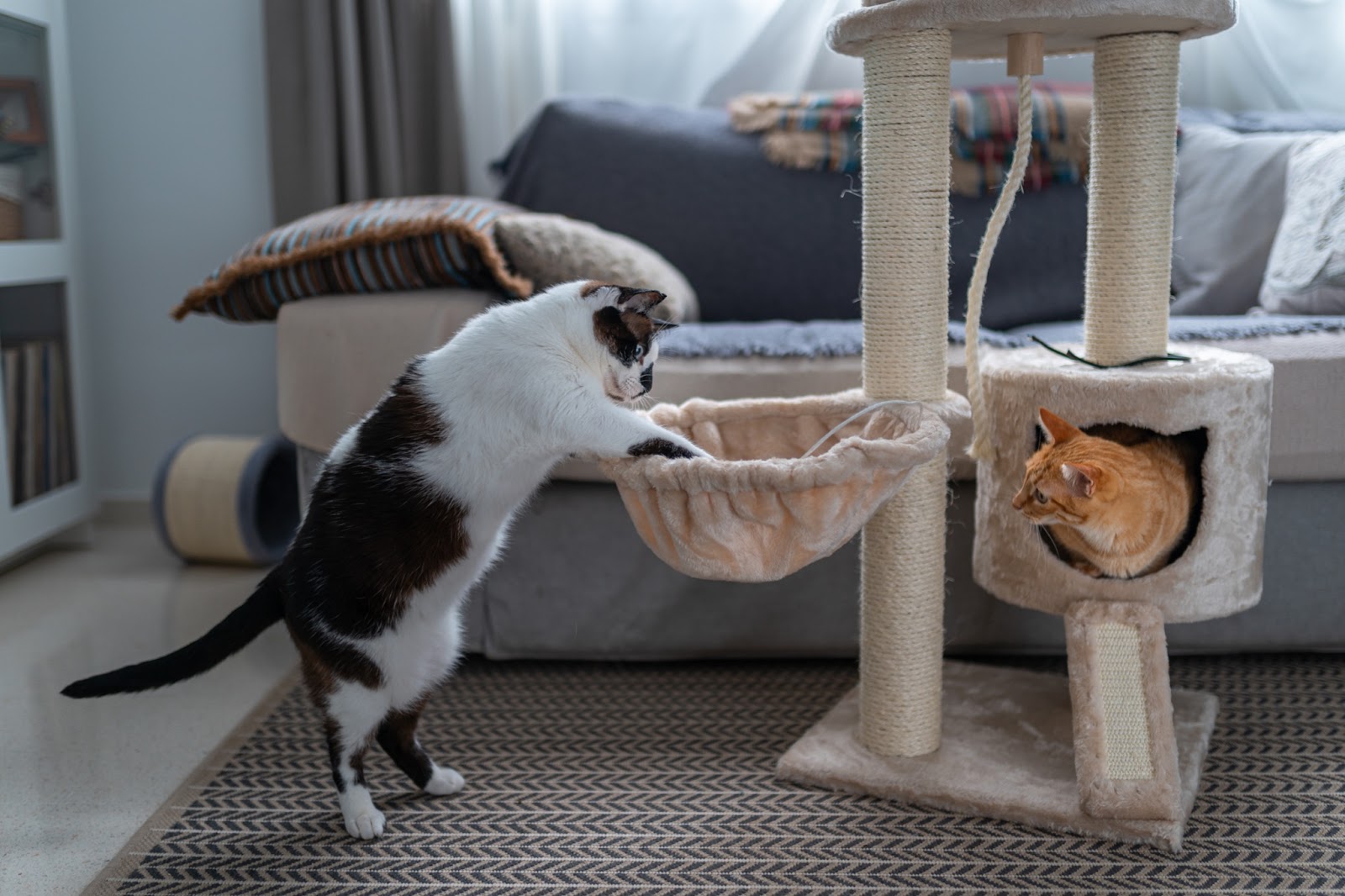
These awesome climbing trees (sometimes called “kitty condos”) are great for cats that like to climb. With models ranging from single tree limbs to full blown playgrounds with dozens of perches, they can be a huge hit, especially for indoor cats. So many cats have a natural interest in heights and these play trees are ideal for adventurous felines.


Build a “Catio” near your home


If your cat is itching to get outside but you’re too anxious to allow them to roam freely, you may want to consider building a “catio”. These enclosed structures are easy to install and are ideal to set up on a patio / deck or in your yard so you can allow your furry friend to enjoy some fresh air without any dangers associated with the outdoors. 


Be mindful when adding another cat to the family


Cats love social interaction and need plenty of exercise and stimulation so finding ways to keep them active while indoors is key to them leaving happy and healthy lives. Because cats can be extremely playful, many families choose to adopt more furry friends and build their family of pets. If you’re considering bringing another cat into the house it is important that you do your research and ensure you are introducing them in a way that is both safe and comfortable. Keep in mind that older cats may be less likely to embrace the change, so consider adding a new cat to the mix when yours is a kitten or a younger age. While introducing a new cat or kitten to your feline family member may seem a bit daunting, depending on the needs of your cat, the companionship might be just what they need.


Many people who adopt cats are surprised to learn that keeping your cat indoors or guarded and supervised outdoors is important to their safety as well as your own. In fact, the AVMA states that keeping owned cats confined, such as housing them in an enriched indoor environment, in an indoor enclosure, or exercising leash-acclimated cats, can minimize the risks to the cat, wildlife, humans, and the environment. If you have any additional questions related to keeping your cat healthy, safe, and active indoors, schedule your next vet appointment at the Bregman Veterinary Group today!